Introduction
What if leadership is not something you step into later in life—but something you are already practicing every day?
In FLEX: Connect, Empower & Lead – A Teen’s Guide to Leadership, this idea takes center stage. The book moves away from traditional, rigid definitions of leadership and introduces a more realistic, relatable approach that fits naturally into a teen’s daily life.
Instead of focusing on authority or titles, the FLEX Leadership model shows that leadership is rooted in how you interact with others. Every conversation, every decision, and every reaction becomes an opportunity to lead with intention.
Rethinking What It Means to Lead
Many teens grow up believing leadership is reserved for class presidents, team captains, or high achievers. This belief often limits their potential before they even begin.
The FLEX Leadership approach breaks that barrier. It reframes leadership as influence rather than position. A teen does not need permission to lead; they simply need awareness.
Leadership shows up in small but meaningful ways:
- Encouraging a struggling friend
- Taking initiative in group work
- Handling disagreements maturely
- Setting a positive example in everyday situations
By shifting the focus from status to behavior, the book makes leadership accessible to everyone.
The FLEX Approach: A Practical Mindset Shift
At its core, FLEX is not just a method, it is a mindset. It teaches teens to pause, observe, and respond with purpose rather than reacting impulsively.
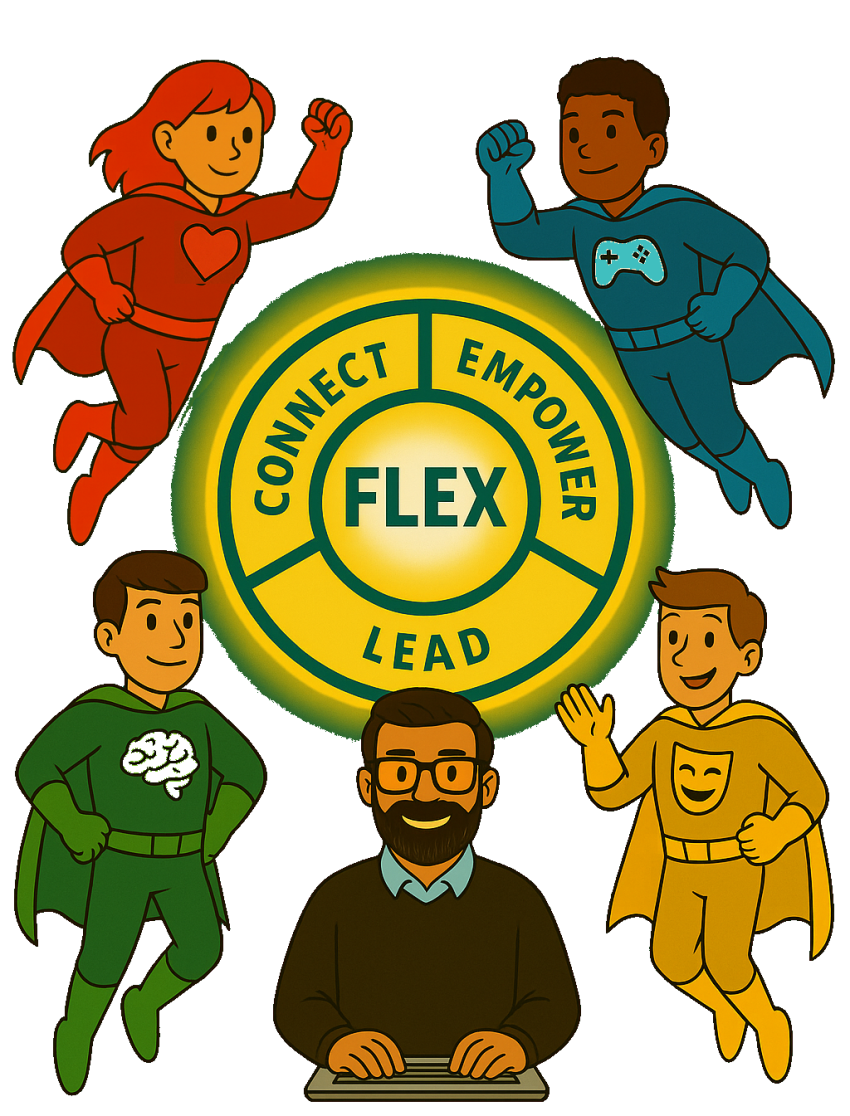
The framework unfolds in three simple but impactful steps:
Connect First
Before trying to lead, understand. FLEX emphasizes the importance of recognizing emotions, communication styles, and individual differences. When teens focus on connection first, they build trust naturally.
Empower Always
Leadership is not about control; it is about lifting others. Teens are encouraged to support, motivate, and create environments where others feel confident and valued.
Lead Intentionally
Once connection and trust are established, leadership becomes more effective. Actions carry more weight, and influence becomes authentic rather than forced.
This sequence transforms leadership into something thoughtful rather than reactive.
Why Understanding People Changes Everything
One of the standout ideas in the book is that most conflicts are not personal—they are perceptual. People think differently, communicate differently, and respond differently.
FLEX Leadership helps teens recognize these differences instead of resisting them. By understanding personality styles, leaders become more adaptable and less judgmental.
This awareness allows teens to:
- Adjust how they communicate
- Avoid unnecessary misunderstandings
- Build stronger and more respectful relationships
Instead of asking, “Why are they like this?” FLEX teaches teens to ask, “How can I respond better?”
Communication as a Leadership Tool
Communication is often where leadership succeeds or fails. Miscommunication leads to frustration, while effective communication builds clarity and trust.
The FLEX Leadership framework encourages teens to slow down and be intentional with their words. This includes:
- Listening fully before responding
- Being aware of tone and delivery
- Choosing clarity over assumption
- Responding instead of reacting
These small shifts create a significant impact. Conversations become more productive, and relationships become more stable.
Handling Pressure and Emotions
Teen life comes with constant emotional pressure—academic expectations, social dynamics, and personal growth challenges. Without the right tools, these pressures can lead to impulsive decisions and conflict.
FLEX Leadership provides a structured way to manage emotions. Instead of being controlled by feelings, teens learn to:
- Recognize what they are feeling
- Pause before reacting
- Choose responses that align with their goals
This emotional control is what separates reactive behavior from intentional leadership.
Growth Through Challenges
Rather than avoiding difficult situations, FLEX: Connect, Empower & Lead encourages teens to face them with a new perspective. Challenges are not setbacks; they are opportunities to grow.
When teens apply the FLEX mindset, they begin to:
- View conflict as a chance to improve communication
- See mistakes as learning experiences
- Develop resilience through problem-solving
This shift in perspective builds stronger, more capable leaders over time.
Confidence That Comes from Clarity
Confidence is often misunderstood as boldness or extroversion. However, true confidence comes from clarity, knowing who you are, how you respond, and how you interact with others.
FLEX Leadership builds this clarity by helping teens understand both themselves and those around them. As a result, their confidence becomes more grounded and consistent.
They are no longer guessing how to respond; they are choosing how to respond.
Leadership That Feels Natural
One of the most refreshing aspects of the FLEX approach is that it does not ask teens to become someone they are not. Instead, it teaches them how to use their natural strengths more effectively.
Leadership becomes less about performing and more about being intentional. It feels natural, not forced.
Teens learn that they do not need to change their personality to lead; they need to understand it and use it wisely.
Conclusion
Leadership is not something that begins in adulthood. It starts now, in conversations, decisions, and everyday interactions.
FLEX: Connect, Empower & Lead – A Teen’s Guide to Leadership offers a refreshing and practical approach that meets teens where they are. Through connection, empowerment, and intentional action, it transforms leadership from a distant concept into a daily habit.
Under the guidance of Shaine Hobdy, teens are not just taught how to lead; they are shown how to think, communicate, and grow as leaders in real life.
Because in the end, leadership is not about being in charge. It is about being aware, being adaptable, and choosing to make every interaction count.